
Metal vs. Solid Wood Dining Table Legs for Manufacturers
Metal vs solid wood dining table legs for manufacturers: aesthetics, durability, shipping, consistency, and cost compared to help you spec the right legs.

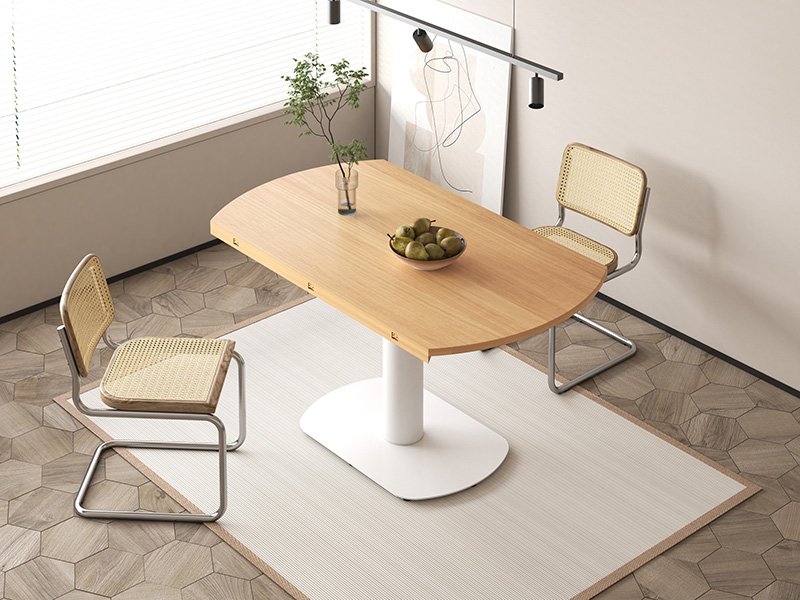
For furniture manufacturers, the choice between metal and solid wood dining table legs shapes everything downstream: the table’s aesthetic, its durability, its shipping cost, and its price point. Both materials have earned their place in the market. This guide compares them from a manufacturer’s perspective, so you can spec the right legs for each product line.
Aesthetic and market positioning
Solid wood dining table legs signal warmth, tradition, and craftsmanship — the natural choice for farmhouse, Scandinavian, and premium residential furniture. Metal dining table legs enable the slim, minimal, industrial silhouettes that define modern and commercial design. The material is not just structural; it is a core part of the design language that positions your table in the market.
Durability and use environment
This is where metal pulls ahead for demanding applications. Metal legs — steel, stainless steel, cast iron, or aluminum — resist the wear, moisture, and impact of high-traffic environments far better than wood. For commercial and hospitality settings, metal is usually the default. Solid wood performs beautifully in residential use but demands careful moisture control and joinery quality to avoid warping, cracking, or joint loosening over time.
Weight, shipping, and consistency
From a logistics standpoint, the differences are significant. Solid wood legs are heavy and bulky, increasing freight cost, and they vary more from piece to piece — natural grain, moisture content, and dimensional consistency all fluctuate. Metal legs are more uniform batch-to-batch and, crucially, are easier to design as knock-down components for flat-pack shipping. For brands shipping internationally at volume, metal’s consistency and shipping efficiency are major advantages.
Cost considerations
Cost depends heavily on specification. Basic steel legs can be very economical at volume, while premium stainless steel or intricate cast iron bases command higher prices. Solid wood cost varies dramatically by species — from affordable rubberwood to premium oak or walnut. Neither material is universally cheaper; the right cost comparison is always spec-to-spec for your specific design.
Choosing your dining table legs
- Choose metal legs for modern, commercial, hospitality, and any design needing slim profiles, high durability, or flat-pack shipping.
- Choose solid wood legs for traditional, premium residential, and designs where natural warmth and craftsmanship are the selling point.
Many successful furniture lines use both, matching material to each table’s market position. For the full sourcing picture — including folding and height-adjustable options — see our dining table legs sourcing guide. OneNest’s KAIXIANG division specializes in commercial-grade metal table bases in stainless steel, iron, cast iron, and aluminum — talk to our team about your table program.