
Pneumatic vs. Electric Standing Desks: Cost & Use Cases
Pneumatic vs electric standing desks compared on cost and use cases: which technology fits which market, and why many brands offer both to cover the full range.

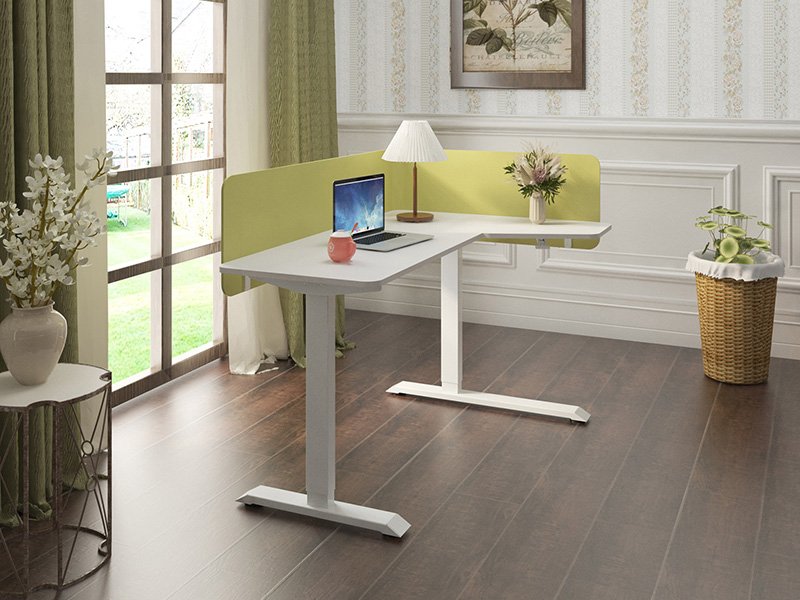
For furniture brands building a standing desk line, the pneumatic vs electric standing desk decision has real consequences for cost, target market, and product positioning. Both are legitimate technologies with distinct strengths. This guide breaks down the cost differences and the use cases where each one wins, so you can build the right product mix.
Pneumatic vs electric standing desk: the difference
A pneumatic desk lifts with a gas spring and a manual lever — no power, no motor, no electronics. An electric desk lifts with one or more motors controlled by a keypad, offering programmable presets and push-button operation. That single distinction — gas spring versus motor — drives every difference in cost and application.
Cost comparison
Pneumatic desks are generally more cost-effective to produce. With no motor, control board, wiring, or power supply, the bill of materials is simpler and the assembly is less complex. There is also less to fail, which lowers warranty and support costs over the product’s life. Electric desks carry a higher component cost — motors, controllers, and electronics — but deliver features that command a higher retail price. The right question is not “which is cheaper” but “which cost structure matches my target price point and margin.”
Where pneumatic wins
- Cost-sensitive product lines — a simpler, cheaper mechanism for entry and mid-market desks.
- Power-free environments — spaces where running electricity to every desk is impractical.
- Silent settings — libraries, quiet offices, and shared spaces where motor noise is unwelcome.
- Mobility and flexibility — desks that relocate freely without cable constraints.
Where electric wins
- Premium positioning — programmable memory presets are a marquee feature for high-end desks.
- Heavy loads — dual-motor systems handle multi-monitor setups and heavy desktops with ease.
- Intensive daily use — effortless push-button adjustment encourages frequent sit-stand transitions.
- Corporate and institutional buyers — who often expect programmable, motorized adjustment as standard.

The smart strategy: offer both
Many successful desk brands don’t choose — they offer both technologies to cover the full market. Pneumatic desks capture the cost-conscious, silent, and mobile segments; electric desks capture the premium, high-load, and corporate segments. Sourcing both from a single manufacturer that engineers lifting systems in-house simplifies your supply chain and ensures consistent quality across your entire range.
For a deeper look at pneumatic technology specifically, see our pneumatic lifting desk buyer’s guide, or compare both systems on our lifting desk solutions page. OneNest’s LANT / JELT division engineers both pneumatic and electric systems — talk to our team about building your desk line.